
Simple Whole Foods in Daily Life
January 2026
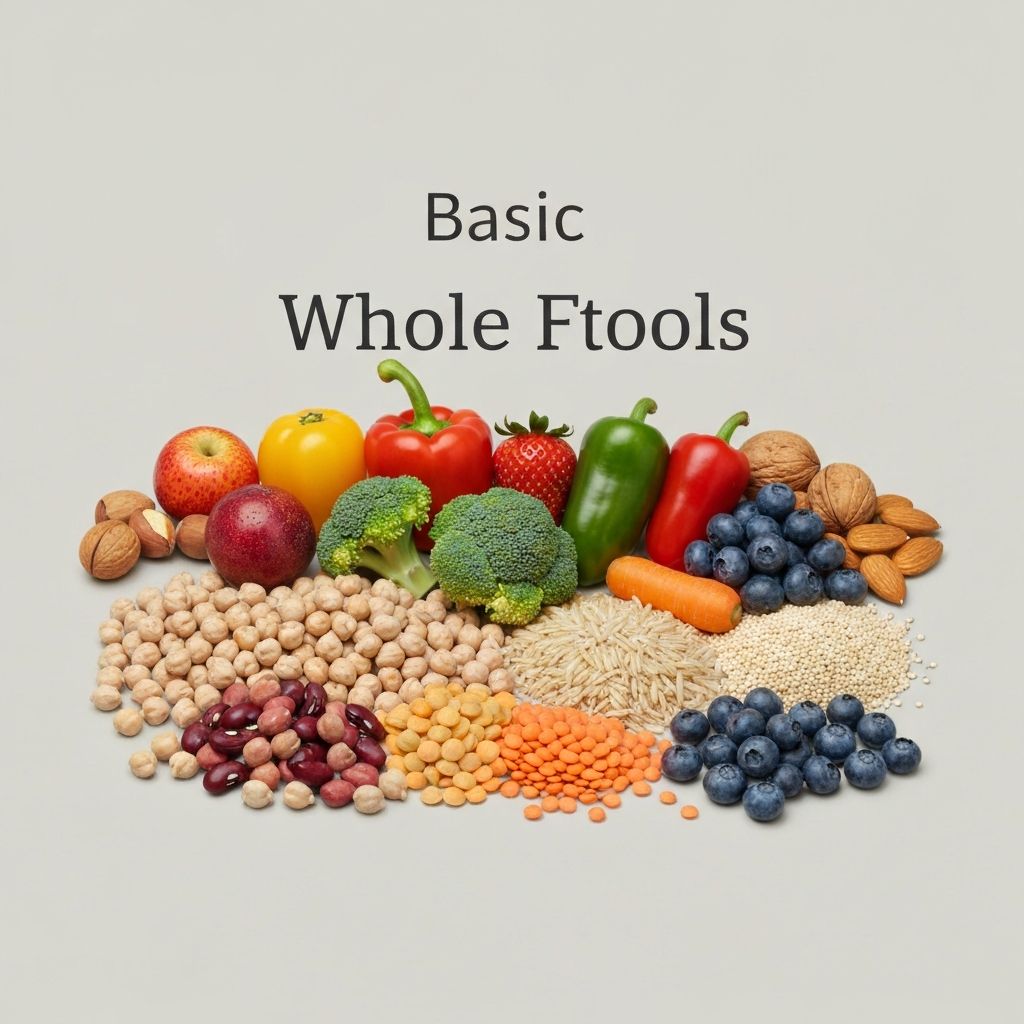
Understanding Whole Foods
Whole foods are ingredients that exist in nature with minimal processing. These are foods that have not been significantly altered from their natural form. They include vegetables, fruits, grains, legumes, nuts, seeds, and simple proteins.
The concept of whole foods is straightforward: these are items that people recognize as food in their basic state. A whole grain is recognizable as grain; a vegetable is recognizable as vegetable. There is no elaborate transformation or complex ingredient list.
Basic Categories of Whole Foods
Whole foods naturally fall into several basic categories that appear across different food traditions:
Vegetables and Fruits
Fresh vegetables and fruits represent the foundation of simple eating. These include leafy greens, root vegetables, seasonal fruits, and other plant foods. They are available fresh, and in many cases, have been central to human eating for thousands of years.
Grains and Legumes
Whole grains—wheat, rice, oats, barley, and others—have provided staple calories in human diets across cultures. Legumes, including beans, lentils, and peas, are protein-rich foods that have been eaten for millennia. Both grains and legumes are minimally processed whole foods.
Nuts, Seeds, and Natural Oils
Nuts and seeds are concentrated sources of nutrients and have been part of traditional diets. Simple oils, particularly olive oil, have been used in cooking and eating for thousands of years across Mediterranean regions.
Proteins
Simple proteins include fish, eggs, poultry, and meat in their basic forms. These are whole foods that require simple preparation. Dairy products like milk and cheese represent another basic protein source, though their processing varies from minimal to moderate.
How Whole Foods Appear in Everyday Eating
Across different cultures and regions, simple eating patterns center on these whole food categories. In the United Kingdom, traditional eating has involved:
- Seasonal vegetables and root crops (potatoes, carrots, parsnips)
- Whole grains and bread
- Beans and legumes
- Fresh fruits when in season
- Simple proteins prepared without complex sauces
- Basic cooking methods: boiling, baking, steaming
This pattern of eating—centered on whole foods and simple preparation—exists not as a prescribed system, but as a practical approach to daily eating. People across many communities organize their eating around available, whole ingredients because this is how food is naturally accessible and affordable.
The Role of Simple Preparation
Simple nourishment is not defined by complexity of recipes. Rather, it describes eating that relies on straightforward cooking methods: boiling vegetables, baking bread, roasting grains, steaming fish. These methods preserve the whole food nature of ingredients without elaborate transformation.
A simple meal might consist of boiled vegetables, a portion of whole grain, and a basic protein. This represents everyday eating in many households and cultures. The focus is on the whole food itself, not on complex preparation or additional ingredients.
Whole Foods and Daily Life
Understanding whole foods is essential for grasping the concept of simple nourishment. These foods exist in everyday contexts—markets, gardens, kitchens. They are not special or unusual; they represent the basic ingredients that have supported human communities for generations.
The diversity of whole foods available means that simple eating can accommodate different tastes, traditions, and preferences. What constitutes simple nourishment in one region may look different from another, but the principle remains: focusing on whole, minimally processed foods as the foundation of eating.